isn't making something.
is making the right something.
That's the problem I solve. Less guessing, dart throwing, and iterating. More listening, learning, and nailing it.
I lead teams that create value for the people who use them.
What matters most is making life easier for people in their real lives. In stadiums, hospitals, at home, or on the side of the road, the interaction between people and their environment matters just as much as what a screen can do.
I specialize in understanding what drives behaviors and decisions when people experience a service or product. The interdisciplinary teams I lead use that context to create evidence-backed strategies built to hold up in the real world, before roadmaps are in place, and design experiences that are built not just to launch, but to generate the best outcomes for the customer and the business.
When I'm brought in, I start by understanding what's known and what's missing, because the real problem usually lives in the gap. These are the tools I rely on to cut through ambiguity and find something that creates value.
Most initiatives fail because they lean too heavily on one and ignore the others.
Desirability asks if people will benefit, and why.
Feasibility asks if it can be built and sustained.
Viability asks if it’s worth doing.
Start with desirability to make something people actually care about. Assess Feasibility and Viability to avoid expensive mistakes downstream.
People don’t want products. They want to experience something that matters to them.
JTBD helps uncover what’s driving behavior and what people are actually trying to do.
Layering this over journey maps makes it easier to see where things break down and where there’s real opportunity.
Design thinking is a way to move from an unclear problem to something testable.
Service design expands that across the full experience: channels, people, environments, procedures, and systems.
Together, they help make sense of what’s happening and what a better version could look like.
I use AI where it improves the experience, and avoid it where it doesn’t.
This principle developed during my work on digital therapeutics, where replacing people outright wasn’t viable. Instead, AI handled clear decisions while nuanced situations stayed with experts.
The same principle still applies.
Working prototypes can be built quickly using AI as an engineering partner.
Mockups have their place, but functional prototypes sometimes surface real needs faster. They change how decisions are made and increase confidence before investments are made.
AI is great for moving quickly through large volumes of information like interview transcripts, secondary research, and large datasets.
It handles the parts that don’t require judgment, so more time is spent interpreting, deciding, and acting.
The result is better synthesis, not fewer people.
Three examples of bringing clarity to complex problems and turning them into something that creates real value for both the business and the customer.
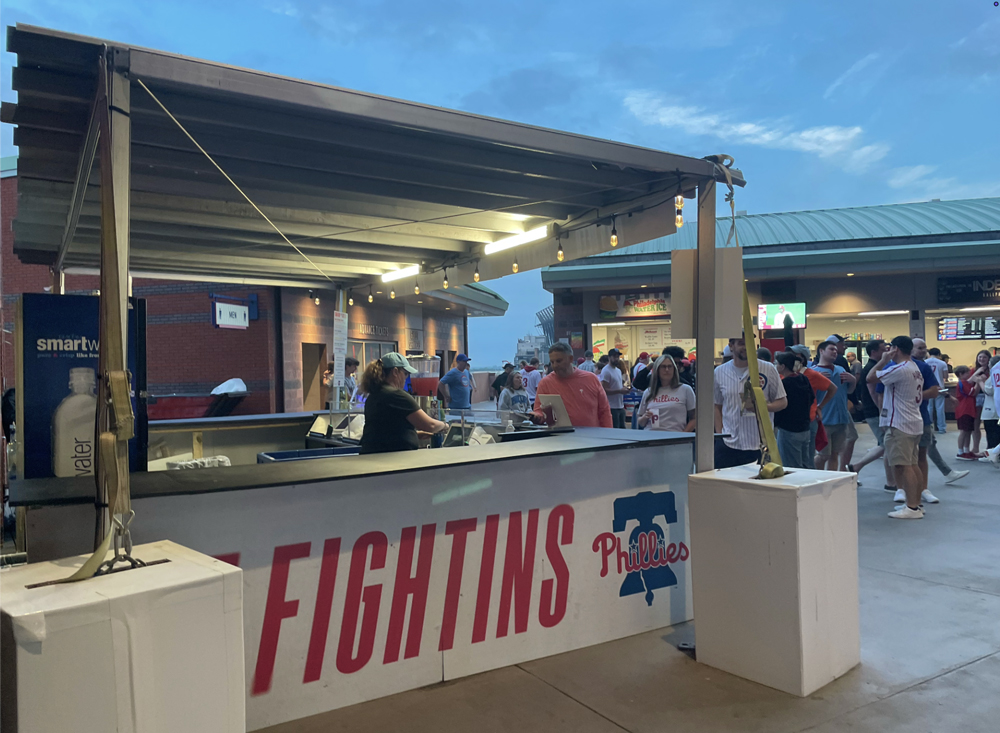
Major League Baseball · Venue Commerce · 2025
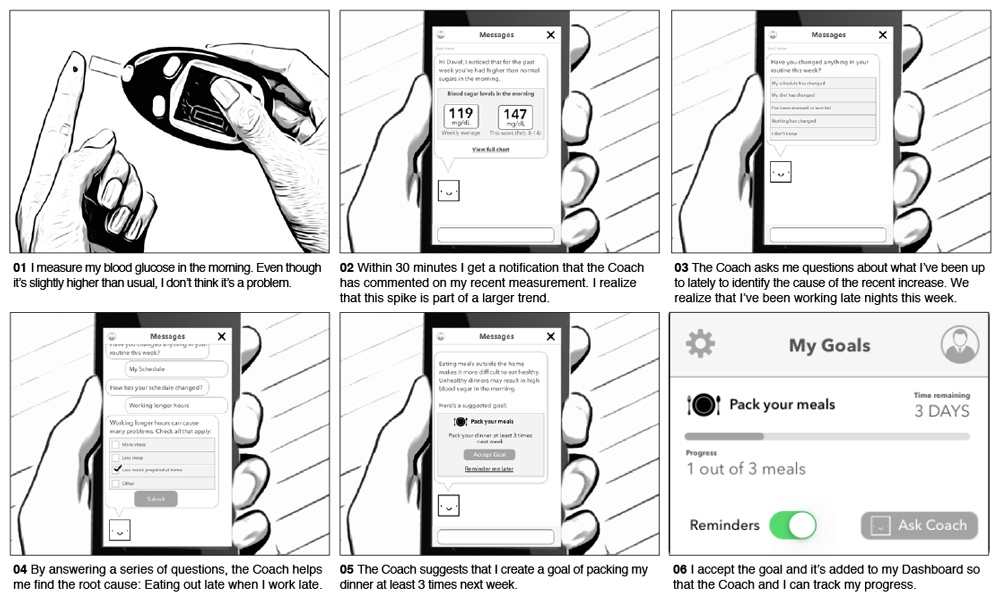
Johnson & Johnson · App-Based Behavior Change · 2016
Irminsul · AI-Driven Gaming Guide · 2026
My career started with websites and human-machine interfaces, moved into digital products and behavioral research, and now centers on helping organizations understand what’s actually happening and what’s worth doing, before committing to a direction.
I’m drawn to problems with a physical dimension. How a service unfolds across space, and where design intention breaks down in real life, is where the most meaningful work tends to be. I’ve led interdisciplinary teams across Healthcare, Sports & Entertainment, Automotive, Financial Services, Retail, Media, Technology, Non-Profits, and Education; both in-house and at agencies.
I am the kind of person who may have too many hobbies. I train at a local archery academy with my daughters, I’ve been restoring a 1973 Datsun 240Z for several years (see it here and get more detail here). I run a club for car enthusiasts called South Mountain Drivers Club. I have nearly five hundred vinyl records, five vintage guitars, three cats, one Scotch Collie, and have lived in Maplewood, NJ, for fourteen years.
If understanding people is treated as a real input to strategy, not an afterthought, and decisions are shaped by that understanding, we should talk.
Based in Maplewood, NJ · Currently available for full-time or consulting roles at the Senior Director to VP level · New York metro or remote