↓ Projects
Diabetes Smart Assistant (Lifescan)
Shifted a diabetes AI from education-first to behavioral intervention grounded in daily life
What was happening
People with poorly controlled diabetes were not consistently following their treatment plans, despite having access to monitoring tools and clinical guidance.
What was wrong
The team assumed the core issue was numeracy: that patients did not understand their blood glucose data.
Key Findings
- 1.Patients couldn't keep track of their doctor's advice for more than a few days.
- 2.Treatment plans didn't take the variables of a patient's life into account.
Insights
- Treatment adherence is driven more by daily context and constraints than understanding of numbers.
- Patients struggle most in moments between clinical visits, not during them.
- Behavioral and environmental factors outweigh informational clarity.
- Focus group feedback reflected interpretation, not lived behavior.
- Real-world routines contradicted stated understanding of the problem.
Demo coming soon
Results
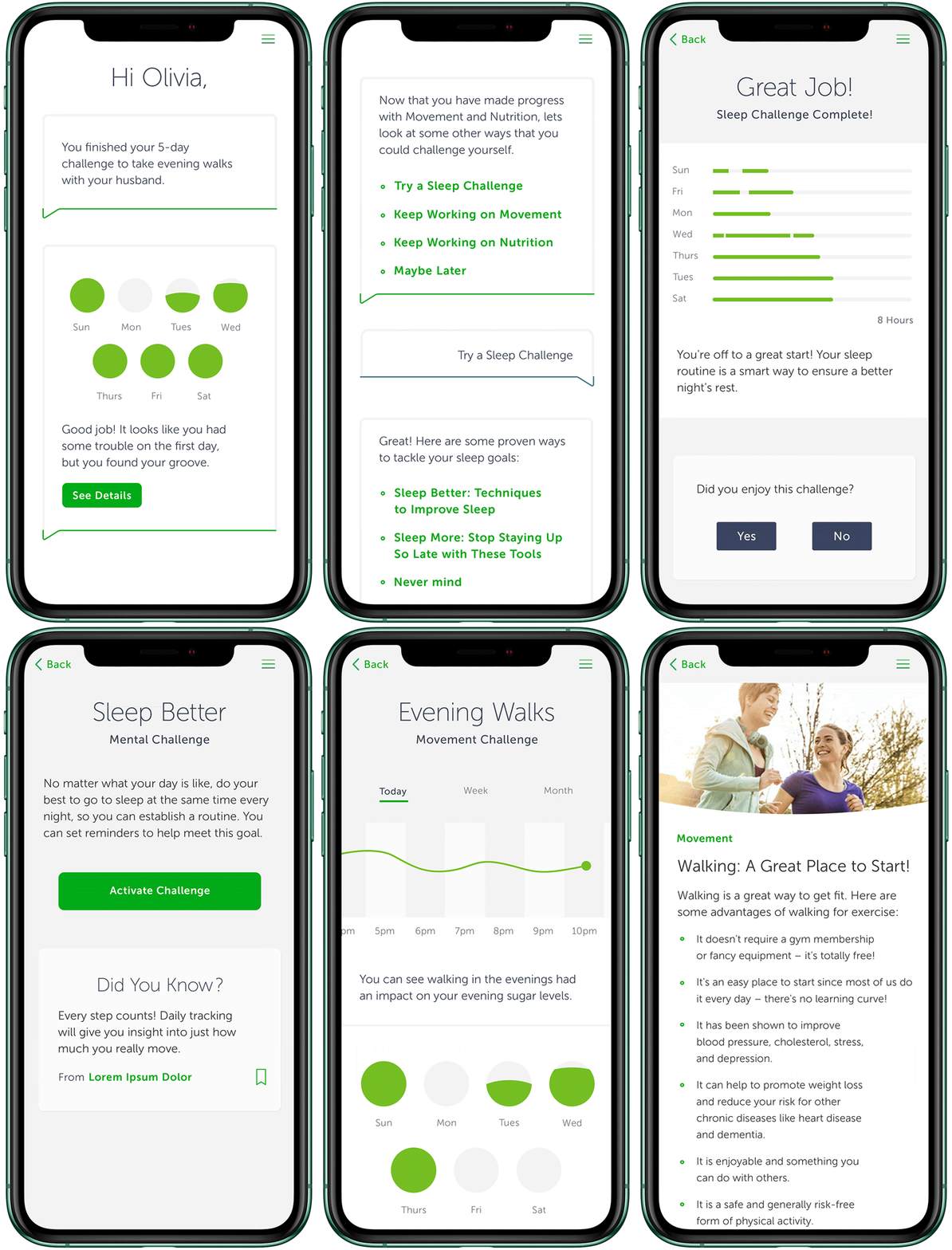
The team moved away from an education-first concept (a conversational avatar explaining data) toward a behavioral intervention model supported by AI and clinical oversight.
Patients gained clearer understanding of their treatment in the context of their daily behavior, not just their clinical data, and the experience became meaningfully more usable in real-world conditions.